Five for fighting

Five lessons can be learned from today's report on Israel's war with Lebanon. In the interest of avoiding another conflict, we should take them to heart.
The Israeli Winograd Committee Report on last summer's Lebanon war was published today, and it presents Israel with something of a Blackadder moment. During the first world war series one of the recruits tells Captain Blackadder he had wanted to see how a war was fought badly, to which the Rowan Atkinson character replies: "Well, you are in the right place then. A war hasn't been fought this badly since Oluf, king of the Vikings, ordered 1,000 helmets with the horns facing down."
The 150-page interim report (which rather annoyingly contains no executive summary) describes a litany of mistakes leading up to and during the war, from logistics and planning, to preparedness, strategy and lack of options considered. The report is interim because it ends at day six of the war (in the good old days, they only used to last that long), with the final document, up to and including day 34, due in the summer. There is plenty of blame to go around and it is doled out in generous helpings to virtually every part of Israel's political and military establishment. Prime minister Olmert's management of the war is described as a "severe failure" and the media in Israel will discuss little else in the coming days.
Here are five comments that try to look beyond the immediate speculation.
 Israeli’s were glued to their television screens this evening to hear the findings of the Winograd Commission, which will have far reaching implications for the future of not only Prime Minister Olmert, but the government and military establishment in its entirety. The commission was set up to investigate the failings of the Israeli military and political leadership leading up to and during the Lebanon War in the summer 2006. It was of no surprise that their findings blamed the three major architects of the war: Prime Minister Olmert, the report said, "bears supreme and comprehensive responsibility for the decisions of 'his' government and the operations of the army.”; Defense Minister Peretz, the report concluded "did not have knowledge or experience in military, political or governmental matters. He also did not have good knowledge of the basic principles of using military force to achieve political goals."; and IDF chief of staff Dan Halutz was criticized for engaging in the war "unprepared.” A stinging indictment, to be sure, but not news to many Israelis who remember a similar commission, the Agranat Commission, set up 33 years ago after the failures of the 1973 Yom Kippur War.
 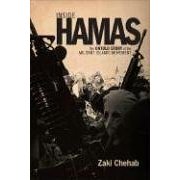 Zaki Chehab’s new , Inside Hamas: The Untold Story of the Militant Islamic Movement is well worth taking a look at. Chehab, a Palestinian refugee raised in a refugee camp in Lebanon, had unprecedented access to the highest levels of Hamas leadership, including Hamas spiritual leader Sheikh Yassin (who was assassinated in 2004). The book also highlights never-before-read files and letters from PLO leaders and bureaucrats. His book takes a controversial and challenging perspective - from his claims of Israeli encouragement and arms deals to the movement with the expressed intention of weakening Arafat’s rule to the supposed notion that Hamas was “surprised” or did not want to win the elections that brought them to majority rule within the Palestinian Authority in 2006.